Showing posts with label Morales. Show all posts
Showing posts with label Morales. Show all posts
Friday, December 13, 2013
Lord of The Rings...Final thought...
As I began to analyze Harry Potter a little more, I too began to wonder as to why Lord Of The Rings didn't catch on as much. In my personal belief, I absolutely love Lord Of The Rings. I love reading the books and watching the movies and seeing how intense they got. They certainly made the movies so well and remember first reading them and getting so hyped to read them! I even remember how Legolas was and still certainly is my favorite character. Legolas is just so badass and makes any situation seem that much more hardcore and diehard. However, when I was analyzing I did of course forget to realize the obvious, Lord Of The Rings books and movies were not made necessarily with the intention of having readers and viewers as young as the Harry Potter stories. But believe it or not, I found that Lord Of The Rings and Harry Potter share a lot of the same qualities.....in the sense that they both have "underdogs" or small characters that end up doing great things and taking on big, they are written in a fictional work that is easy to tap into and understand, and there is huge and apparent theme of good versus evil- with good always triumphing in the end. Yay or nay, thoughts on this one guys?

Who likes Harry Potter? I DOOOOOOOOO!
After looking at series of passages in Harry Potter, I've come to the final conclusion that everyone seems to truly love Harry because he's considerably a underdog throughout the plot and people love to "exist" in a world other than the real world. A world of fiction. It allows you to temporarily escape your "current world" and focus on the plot of the story that let us say something that is going on in your life. Many people actually cherish the opportunity to escape to another dimension or realm. I know myself, I certainly loved and cherish books by Nicholas Sparks and I remember getting so heart-felt and mushy feeling when I read novels like The Lucky One or The Notebook. It was great to able to kind of transport myself into a different realm and feel happy and content when I had to endure a hot and boring day at work haha! Mainly, what I think is absolutely outstanding is the fact that Harry seems so timid and apprehensive, yet his true courage, bravery, and heroism shines through in the scary situations he encounters like when he was in The Forbidden Forest and he sees Lord Voldemort drinking the blood of a unicorn or even when he goes through all the "traps" to protect the Sorcerer's stone from Lord Voldemort who we later find out "inhabits" the body of Professor Quirrell. Does anyone feel the same about Harry?
Thursday, December 12, 2013
When Reviewing Brothers Grimm...
When I started my review for the exam, I wanted to go back over the stories from Brothers Grimm and partially because they were absolutely entertaining to read. As I re-read Rumpelstiltskin, I though it was insanely interesting to analyze the weird contrasts between the Brothers Grimm version and the version from Once Upon A Time. First, of all, can we just acknowledge the creepy and sketchy Dark One is in the Once Upon A Time version and how much of a freaking jerk he was. That was so rude and disrespectful making Rumpelstiltskin kiss his boot and practically bow down to him in front of his son. I would be so ashamed and unbelievably embarrassed. It is really crazy to see the difference in the stories as well....one is somewhat like a Disney type, where there is a problem presented and someone prevails in the end. While the Once Upon A Time version is all hardcore and medieval- they oddly enough complete very different tasks or "adventures" to gain what they want in the end. As well, Rumpelstiltskin ultimately wants different things in both stories. In the Once Upon A Time version he is seeking to gain absolute power to protect his son and in the Brothers Grimm version Rumpelstiltskin only wants to take the child away from the miller's daughter. I did however, love re-reading the story, The Mouse, The Bird and the Sausage. It was certainly a cute story to say the least but very sad in the end. I was absolutely heartbroken that essentially because the other stupid bird tried to convince the main bird that he was carrying most of the weight- thus leading to a disagreement about the balances of work. Ultimately leading to the swapping of tasks and because none of them knew what to do in their new tasks they either got eaten or killed. What a horrible way to end a story because for a majority of the story it definitely seemed like they had a good thing going for them. We seem to see an apparent theme of death in Brothers Grimm, at least from my perspective..... In the story, The Riddle, the princess is very adamant about being able to crack and solve any riddle thrown her way. With everyone who told her a riddle that could be solved, would eventually lose their head. The princess was also ready to go through extensive lengths to figure out the answer to a riddle by sneaking in on the prince who told her the final joke while he was sleeping and covering herself in a robe so she could disguise herself. Too bad, she was caught when she though she would get away with it.....haha serves her right. Overall, it is definitely refreshing to see a twist in simple short stories that you would completely expect a sappy, happy ending but that is not what you get at all. Prime example, Brothers Grimm version for Cinderella.....enough said.
Sunday, December 8, 2013
Puzzled over the Possible Moral Presented in Rumplestiltskin
I think most of us have heard of the story of Rumplestiltskin before. It is a classic and well known fairy tail which. However it has captured my interest for a few reasons. First, it is one of the better known fair tales that never (as far as I know) received a Disney adaptation. Unlike the other childhood stories that we have heard in the past (Cinderella and Snow White to name a few) this one was never presented to us as a sanitized (and de-awesomed) anamated feature curtisee of Disney. Yet, we have all probably at least heard the name Rumpldtiltaskin before, if we had not heard some version of the story itself. What give it this staying power? Probably the name itself helps, as it is incredibly distictive, and the mere mention of the name to a person who has not heard the story would probably merit a re-telling.

However, what I find most remarkable about the story is not its staying power despite lacking a Disney adaptation. Instead it is that we have continued to hear it despit the fact that is has no clear moral. I have been telling several Grimm tales over the last serval days and at the end of several stories people have asked me " so what is the moral exactly?" Which caused me to automatically ask.... What the heck is the moral of Rumplestiltskin?!?
What is the lesson? It can't be "always keep your promises," because the woman clearly got out of having to give up her first born child by crying until Rumplstiltskin relented. Furthermore we, as the audience, clearly don't want the mother to be parted from her child, so keeping promises can't be it.

The moral can't be "don't boast unless you can make good on your word," because the father was the person guilty of that and it was not he that was punished for it, it was his daughter. The father also disappears half way through the story and is not heard from again (maybe his daughter was rightfully ticked off and did not want him in her life). Apart from being worried about his daughter (presumably) the father does not suffer at all. So "don't boast" can't be it.

It can't be "don't be greedy," because only the king is guilty of that and he gets everything he wants. Not once, not twice, but three times is straw turned into gold for him, he marries a woman whom he believes is capable of turning straw into gold, and he gets to keep his firstborn child. This guy gets everything he wants!

The moral can't be "don't make promises you aren't prepared to keep," because if the girl had not promised to give Rumplstiltskin her child then she presumably would have died (although he only said he would marry her is she succeeded, but I feel it's a pretty safe assumption since he threated that the two times previously). As the audience don't want an innocent prison to die because of the stupid boasts of her father, so the previously mentioned lesson does not really aply. But what is left?

Does this story even have a lesson? Does it have a moral that the audience is supposed to take away? Or is this story just .... well, a story. A series of events that capture the audience's attention and provide entertainment but achieve nothing else?

The closet thing that I can pull from it is that "good will always prevail in the end, and the perpetrators of evil will be punished for there wickedness."

This is not a bad lesson, it just feels..... broad. Compared to some more applicable morals in other stories (Snow White= your envy and jealousy will make you do bad things and may make you into a bad person) this feels more like an outlook that one it trying to impart as opposed to a directly applicable life lesson.
What do you guys think? It there a moral? Is this just a really catchy story that has survived the test of time? Is it a tale showing that good will prevail over wickedness? What is it? WHAT IS IT?!?


Although it did get a horror film adaptation. So.... that apparently happened.

However, what I find most remarkable about the story is not its staying power despite lacking a Disney adaptation. Instead it is that we have continued to hear it despit the fact that is has no clear moral. I have been telling several Grimm tales over the last serval days and at the end of several stories people have asked me " so what is the moral exactly?" Which caused me to automatically ask.... What the heck is the moral of Rumplestiltskin?!?
What is the lesson? It can't be "always keep your promises," because the woman clearly got out of having to give up her first born child by crying until Rumplstiltskin relented. Furthermore we, as the audience, clearly don't want the mother to be parted from her child, so keeping promises can't be it.

The lesson that Rumplestiltskin learned.
http://www.quickmeme.com/img/01/01a76400ed7c979aa543084630dd612e3c195fbd547202707c67829ae5940ef5.jpg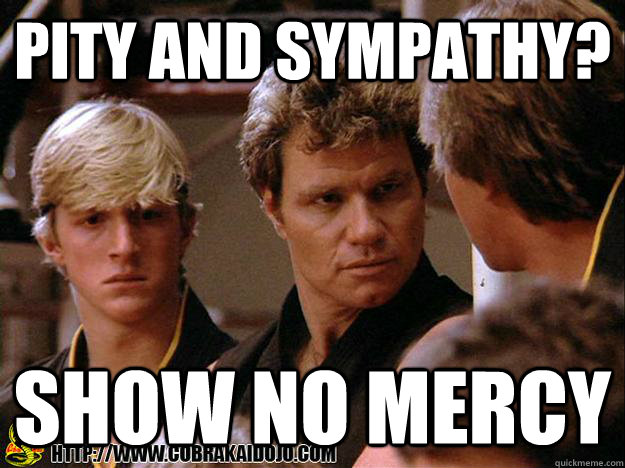
The moral can't be "don't boast unless you can make good on your word," because the father was the person guilty of that and it was not he that was punished for it, it was his daughter. The father also disappears half way through the story and is not heard from again (maybe his daughter was rightfully ticked off and did not want him in her life). Apart from being worried about his daughter (presumably) the father does not suffer at all. So "don't boast" can't be it.

On a side note, after the lady appears to have turned straw into gold the first time why does the king keep threatening to kill her? She has seemingly already done this feat once. Why risk killing the person who could potentially provide you with infinite wealth?

It can't be "don't be greedy," because only the king is guilty of that and he gets everything he wants. Not once, not twice, but three times is straw turned into gold for him, he marries a woman whom he believes is capable of turning straw into gold, and he gets to keep his firstborn child. This guy gets everything he wants!

So the moral appears to be: you should seek to always appease your ever growing greed... Well that's a new one.
http://images2.wikia.nocookie.net/__cb20110123012542/hercxena/images/e/eb/Sumerian_Treasure.jpg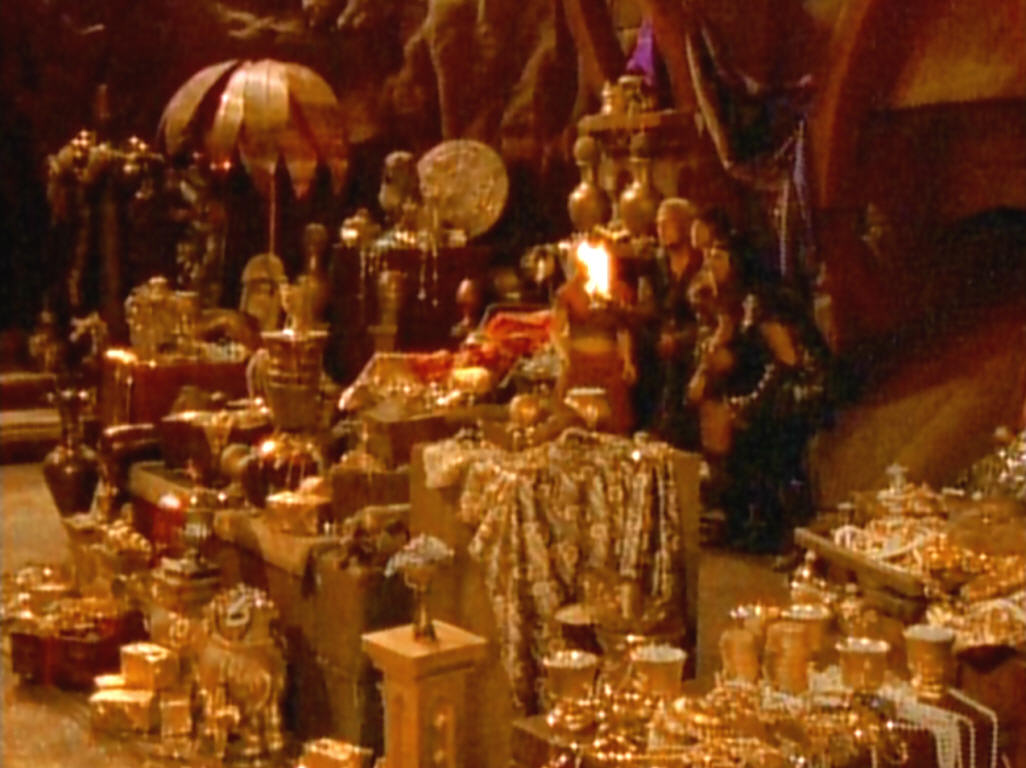
The moral can't be "don't make promises you aren't prepared to keep," because if the girl had not promised to give Rumplstiltskin her child then she presumably would have died (although he only said he would marry her is she succeeded, but I feel it's a pretty safe assumption since he threated that the two times previously). As the audience don't want an innocent prison to die because of the stupid boasts of her father, so the previously mentioned lesson does not really aply. But what is left?

So remember, keep your promises children, unless there is a mysterious, gold-spinning elf involved. In which case all promises, agreements, and contracts are null and void.

Does this story even have a lesson? Does it have a moral that the audience is supposed to take away? Or is this story just .... well, a story. A series of events that capture the audience's attention and provide entertainment but achieve nothing else?

Shut up children and you shall hear
A tale I'm currently pulling out of my... ear.

The closet thing that I can pull from it is that "good will always prevail in the end, and the perpetrators of evil will be punished for there wickedness."

...By ripping themselves in half!!!

This is not a bad lesson, it just feels..... broad. Compared to some more applicable morals in other stories (Snow White= your envy and jealousy will make you do bad things and may make you into a bad person) this feels more like an outlook that one it trying to impart as opposed to a directly applicable life lesson.
What do you guys think? It there a moral? Is this just a really catchy story that has survived the test of time? Is it a tale showing that good will prevail over wickedness? What is it? WHAT IS IT?!?

Good enough for me!

4 of 5
Wednesday, December 4, 2013
Earth, Wind, & The Shire- Too Funny Not To Use As A Title!
I can't even begin to explain how happy and excited about having Lord of The Rings and Harry Potter as some of the required readings for this course. The Lord of The Rings movies are among some of my favorite. I think it is interesting viewing the central ideas of Harry Potter and the central ideas in Lord of The Rings- because believe it or not they're not terribly different because they contain a lot of similar elements. I also thought it was awesome to see how schooling or the topic of being in school takes an effect or role in Harry Potter because the book was initially created as a children's book and so therefore the idea of school certainly makes it a lot more relatable. It also allows for a place in a story where kids can be with other kids and certainly away from their parents and it provides them an opportunity to figure out who they are and where there are going in their lives. As Harry Potter develops from a shy and quiet boy, you see a growth towards a confident and certainly courageous young man. Or better known as a bildungsroman, as Dr. Mitchell-Buck stated, it is definitely a coming of age story- a story as to where you see someone develop and grow up through age. Being at a school implies that it has a lot of structure as well- they have a school, ministry, sports, hospitals, etc. Further on, I thought it was definitely interesting to see why there was an importance of having a clear cut separation- as far as having a muggle world and a magic or wizard world. The world is just viewed as amazing and spectacular because the muggle world is just so plain, bland, and ordinary. As to where the muggle world also has that element of surprise and mystery and you can always expect something unique, extraordinary, and new happen.
Wednesday, November 20, 2013
What The Hell Cinderella?
I thought the Brothers Grimm stories were certainly different to say the least. I thought it was crazy how far stretched out these versions were compared to the initial stories I was used to! For example, take the Hansel and Gretel story. At first glimpse, it seemed as though not much changed but after recalling the version I was used to I began to notice different small details. The version I was just used to Hansel and Gretel only dropped bread, not pebbles as well. I also did not recall from the version I was used to the part where there was a step-mother who was essentially a big jerk and convinced the father, her husband, to ditch the kids in the woods because they were so poor and hungry. The way I remember it, they siblings initially just got lost in the woods or something along those lines. After the beginning, some parts of the story seemed recognizable- even towards the end. HOWEVER, I was very thrown off at the ending involving the duck used to get across the lake. I had absolutely NEVER heard of that ending to Hansel and Gretel. But it does seem to make sense, considering they siblings wanted to use the duck as a symbol of guidance to get across the lake and make it home. That was certainly interesting. As far as the stories come, Hansel and Gretel was not too bad. I will say that the Brothers Grimm version of Cinderella is all types of screwed up! Some changes I noted first off in the story, the father was not dead- in fact he was a jerk for allowing the stepmother and stepsisters to gang up on his daughter and even give her the name Cinderella. Moving on in the story, we saw consistencies in Brothers Grimm version to Disney, where the stepmother and stepsisters were jerks and did not want to let Cinderella go to the ball. However, in Brothers Grimm- the ball lasted for 3 consecutive days.....they really knew how to party I suppose! Cinderella also got her dress from a hazelnut tree so in Brothers Grimm it was interesting not to see a fairy godmother aspect. Can we just examine the part where the princes on the third day of the ball tries to trap Cinderella by putting a sticky substance on the stairs to make her feet stick. What the hell?! So she loses the shoe....obviously. Thus, when the prince arrives at the family's home to try on the shoes of all the ladies, the stupid stepsisters are told by their mother to cut off their heel and big toe to make their feet fit the shoe so they can become queens. UM WHAT?! Then of course, he finds Cinderella and it all works out because her foot fits....but wait it's not over......at their wedding the stepsisters get their eyes pecked out by birds. Seriously?


Jessica Morales' Post #1 of 5
Friday, October 11, 2013
A little bit of everything...plus a bag of chips- Jessica Morales
Jessica Morales
Blog Post Assignment

Blog Post Assignment
I
thought it was insanely interesting the topic of Necromancy and Clerics. I
could hardly believe that these clerics that were supposed to be doing holy
practices and studying holy beliefs would take part in the magic and
"demonic ways." What I couldn't understand is why these
"holy" clerics would even want to take part in the magic if they know
the consequences of their actions. However, reading into Kieckhefer's chapter
7, he further develops the ideas of why one would want because “…it is used to
affect other people’s minds and wills. Secondly, the necromancer can create
illusions. Third, is to discern secret things, whether past, present, or
future” (Kieckhefer 158). That’s certainly a powerful ability
to have and to think you could have that power over someone could definitely be
tempting. Just imagine, being able to convince someone, like for example, how
freaking cool would it be to convince like Barack Obama to give me a million
dollars just because I had asked him to! Not one single person could tell me
that would not be amazing!! Then again, we definitely have to take into
consideration that these clerics were very much skilled to perform these sorts
of acts. They had the specific knowledge or “Basic knowledge of the rites of
exorcism, and perhaps an acquaintance with astrological images and other kinds
of magic, might well lead them to experiment with conjuration” (Kieckhefer
154). We also must see that they serve their own form of punishment in their
own way because Kieckhefer tells of story where a man “…was snatched from the
demons’ jaws…Finally a monastery in Vienna took him in, and he gained fame for
his holiness and preaching, but even so found himself molested by demons
through life” (Kieckhefer 156). What I also thought was INSANELY interesting
was that necromancers have the ability to perform something called: image
magic. Essentially what image magic and it was defined: “…the action carried
out on the image is transferred to the person represented. Thus, love magic may
involve writing the names of demons on an image of the intended person, so that
these demons will afflict her until she submits to the necromancer’s will. To gain
favor from some dignitary the magician carves an image of that person, bearing
a crown if he is a king, or other symbols of power as the case demands”
(Kieckhefer 163). Holy Jesus, was my initial thought. I thought that it was
absolutely INSANE that a person who had these capabilities could influence you
and control you to an absolute degree and force you to be under their control
until you essentially give in to them. What I actually found to be quite
humorous was not only did Clerics participate in all these crazy demonic forces
but they also had a book or “instructional” manual to tell them of how to do
so. Some of these texts included: the Munich Handbook, Treasury of Necromancy,
and the Book of Solomon. Oddly enough one would assume that the book would
entail of rituals of how to harm people or just overall control them, however,
it is quite the contrary. These books told of really explicit rituals such as: “…baptizing
images, fumigating the head of a dead person, adjuring one demon by the name of
a higher demon, inscribing characters and signs, and invoking unfamiliar names”
(Kieckhefer 157). Later, we see Kors and Peters tell of many outcomes people faced
and suffered because of “witchcraft.” On page 178, it states, “…many persons of
both sexes, heedless of their own salvation and forsaking the catholic faith,
give themselves over to devils male and female…ruin and cause to perish the
offspring of women.” That’s a very strong statement to make and a very crucial
one at that because at the time so children were considered very precious.
Children were so precious because of the fact they had a tendency to not make
it. Although throughout parts of our text, we see many accusations of witches
made, specifically who were women, it was quite interesting to see the
accusation made that women were more than likely to be witches based on
biblical texts. Kors and Peters make the argument that a woman is likely to be
a witch because, “...it should be noted that there was a defet in the formation
of the first woman, since she was formed from a bent rib, that is, rib of the
breast, which is bent as it were in a contrary direction to a man. And since
through this defect she is an imperfect animal, she always deceives” (K/P 184).
I thought that was absolutely and HIGHLY controversial because as the creation
of woman happened, God intended to create her from the rib of a man to essentially
make her equal and one with him. Now, we see an alternative view as Kors and
Peters try to declare that there was a defect in the making of women. Damn, if
only we had the return option, right? Continuing with this chapter’s topic, I
thought it was QUITE humorous that they claimed another defect to women and it
being their voice, haha!!!! The humor kicks in when the text states, “For as
she is a liar by nature, so in her speech she stings while she delights us.
Wherefore her voices like the song of the Sirens, who with their sweet melody
entice the passers-by and kill them. For they kill them by emptying their
purses, consuming their strength, and causing them to forsake God ” (K/P 187).
Wow, talk about sounding like a back-handed compliment! As the chapter
continues, I find it very odd how it makes a strange transition from witches
and women to demonic forces. Then I definitely became undoubtedly confused because
the text proceeds to say of demons that, “they can see absent things as if they
were present; they can turn the minds of men to inordinate love or hatred; they
can at times strike whom they will with lightning, and even kill some men and
animals” (K/P 190). What the hell? They just spent the last few chapters
arguing of how women suck because they’re actually awesome (at least would be
in our time period) and then turn around and say oh sorry guys it was really
the demons who do all the “heavy-lifting.” I suppose my question really is: why
put so many through tortures and then proclaimed that it was really a complete
separate entity that causes these demonic forces. I guess it’s the fact
that a witch or necromancer comes into contact or connection with demonic
forces does it make it that much work. If you asked me my opinion, I would
honestly be more afraid of a demon or the Devil than I would be of a witch or
necromancer. However, I can certainly see why people were of afraid of these
witches and necromancers and it was most likely because they had those “additional
readings” of the: the Munich Handbook, Treasury of
Necromancy, and the Book of Solomon. Oddly, enough a conjuration of a devil in
the Munich Handbook is derived and adapted from an exorcism which would be used
to expel an evil entity from a person or place. This conjuration states, “The
Word made flesh commands you. He who was born of a virgin commands you. Jesus
of Nazareth, who created you, commands you, to fulfill at once all that I ask
of you, or all that I wish to have or to know. For the longer you delay in
doing what I command or order, the more your punishment will increase from day
to day. I exorcise you, O accursed and lying spirit, by the words of truth” (Kieckhefer
167). What the actual hell! Does anyone see the insanity in this? It is
absolutely for me to think how it is even possible for this to be considered an
adapted exorcism used to conjure demons. I am very puzzled by this. Now I
supposed this would be my last puzzling question, is if the world knew texts
like these existed and they were trying to prevent necromancy, witches, and
overall the magic realm then why not get your hands on the texts and destroy
them?

Tuesday, September 24, 2013
Surgeons, Stars, & So Much More....
Jessica Morales
Blog Post #1
Ah where to begin with the topic of magic.... With all the topics being covered; I wanted to talk about some of the readings with did from Kieckhefer. Throughout chapter 6, there was a strong emphasis on the use of astronomy and horoscopes. On pages 120-122, it stated "The most basic use of astrology was in making horoscopes, which would indicate the influence that the stars and planets had on a person at birth or at any other juncture in life.....Astrology had implications for medicine. A surgeon or barber- surgeon was supposed to know which signs of the zodiac governed which parts of the body, because it was dangerous to operate or bleed a patient when the wrong constellation was dominant." I thought that this definitely showed the emphasis that magic was an active role. The barber and or surgeon was definitely capable of performing such surgery, yet he did not act upon it because he or she knew it might not have been a good idea to go against the stars. It also revealed how much this magic and even simple things like astrology took apart in a big role in their lives at the time.
Blog Post #1
Ah where to begin with the topic of magic.... With all the topics being covered; I wanted to talk about some of the readings with did from Kieckhefer. Throughout chapter 6, there was a strong emphasis on the use of astronomy and horoscopes. On pages 120-122, it stated "The most basic use of astrology was in making horoscopes, which would indicate the influence that the stars and planets had on a person at birth or at any other juncture in life.....Astrology had implications for medicine. A surgeon or barber- surgeon was supposed to know which signs of the zodiac governed which parts of the body, because it was dangerous to operate or bleed a patient when the wrong constellation was dominant." I thought that this definitely showed the emphasis that magic was an active role. The barber and or surgeon was definitely capable of performing such surgery, yet he did not act upon it because he or she knew it might not have been a good idea to go against the stars. It also revealed how much this magic and even simple things like astrology took apart in a big role in their lives at the time.
Subscribe to:
Posts (Atom)